Categorizing Scents

Scent resists organization. Even so, there are quite a few tools for categorizing perfume materials. I like to use them as jumping-off points when I’m brainstorming, rather than puzzles where every scent may lock perfectly into place.

My favorite is Mandy Aftel’s natural perfume wheel. It looks like a color wheel, visually characterizing and grouping smells. Unlike a color wheel, however, a scent’s position on the wheel doesn’t necessarily correspond to special relationships the way a color wheel indicates complementary colors, etc.

I’ve also been poking around on Scent Tree, an interactive website that includes synthetic molecules and groups scents into “branches” such as fruity, undergrowth, leather burnt, and buttery.

Do you use a tool to reference or categorize scents? What have you found helpful?

Perfume Note: Lemon

lee price lemon bath paintings

When I was 22 I moved to gray drizzly Seattle—my first time living on my own—and I spent a lot of time looking at these paintings by Lee Price and drinking tea with entire lemons emptied into the mug. Lemons are bright, they cut through. Today was another gray drizzly day in Seattle and I spent it smelling lemon perfumes.

lemon with perfume samples

Citrus notes are everywhere in perfumery, but a distinctive lemon note can be hard to pull off because we associate it so strongly with cleaning products. The surprise winner of the day for me was Dirty Lemon by Heretic Parfum, which I had never smelled before. It’s rich and warm like lemon-oil-soaked wood baked in the sun and seasoned with pepper.

If you’re looking for a fortifying lemon scent, try Fzotic Five: dry lemon atop sweet wood, with mists of ozonic salty air.

HEELEY Oranges and Lemons Say the Bells of St. Clements is juicy and bold and balanced with a subtly bitter note and vetiver; his Note de Yuzu is a salted marine lemon.

D.S. & Durga Italian Citrus is a balmy balsam lemon, soft and subdued.

Departing from lemon-centric perfumes, Zoologist Chameleon opens with a distinct lemon note but is also a delightful pastel tutti frutti tropical haze.

Xerjoff 1861 Naxos wraps me in a plush luxury hotel bathrobe with lemon, lavender, tonka, and tobacco.

Masque Milano Terralba is lemon and clary sage and vetiver growing cliffside by the sea.

The actual lemon I had in my kitchen, when I grated the peel a bit, smelled like lemon drop candy. This lemon bonanza of a day was topped off with J.W. Dotson’s Lucky Lemon online class, a wonderful survey of the expansive cultural history of lemons, hosted by The Institute for Art and Olfaction.

The Act of Smelling

“The act of smelling something, anything, is remarkably like the act of thinking itself. Immediately, at the very moment of perception, you can feel the mind going to work, sending the odor around from place to place, setting off complex repertoires throughout the brain, polling one center after another for signs of recognition, old memories, connections.”

—Lewis Thomas

Banana Scent Color Palettes

Three banana scent color schemes.

Yesterday I tried a sample of Hilde Soliani Donna Sentenza and was carried away on a banana pudding dreamboat, vanilla wafers swimming beside me like dolphins. So I pulled out a couple other banana perfume samples, along with my color-aid card deck from long ago art school. L’Artisan Parfumeur Bana Banana is a milky-creamy green banana, a light-hearted soirée full of sophisticated party dresses. Sarah Baker Jungle Jezebel screeches in on neon heels of peach lactones, tutti-frutti cocktail in hand.

Olfactory Art: “Es liegt was in der Luft” by Patrick Palcic

patrick-palcic-olfactory-art-clock

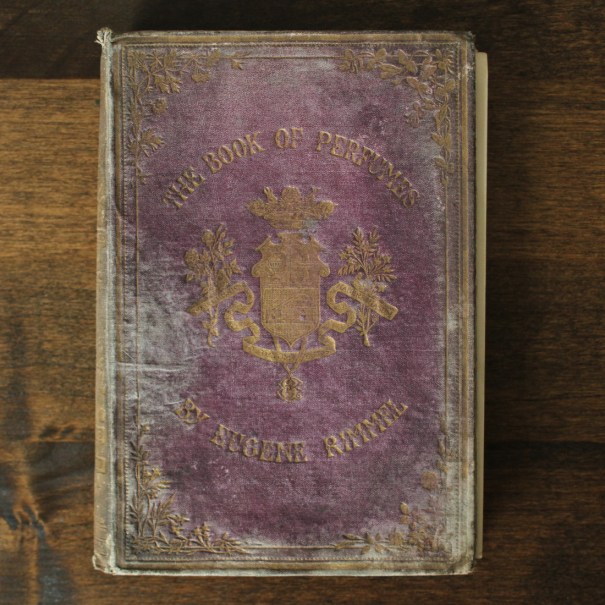
After I posted the “floral clock” from The Book of Perfumes (1868), I learned about Patrick Palcic’s beautiful olfactory clock, “Es liegt was in der Luft” (2016), or “There is something in the Air.” Every hour, the clock rotates until a scent trickles down the heated clock face, releasing a unique smell at every hour.

The idea of a clock is especially resonant for me right now—or rather, it’s especially dissonant. Time feels structureless as one day becomes another. A weekday working from home has no demarcation from evenings and weekends. Outside it’s spring, but this season feels like a big question mark and none of us know how this strange moment will ripple forward into the unknown future.

Creative interpretations of clocks can play with our ideas about the structure of time—I remember, for example, meeting someone who wore a watch with a single hand that moved around the clock face once every 24 hours. An olfactory clock, however, speaks uniquely to our *experience* of time. The idea of “9:00 pm” or “Monday” may feel irrelevant, but through our senses we can still experience the passage and structure of time.


Pictures courtesy of Patrick Palcic, patrickpalcic.com

Perfume Material: Clary Sage

clary sageClary sage in perfumery is ever-present yet often sidelined, playing a supporting role in fougères, chypres, lavender, forest, and floral scents. I recently got my hands on a clary sage absolute, which is rich like mulched hay, as opposed to the brighter, herbaceous essential oil.

It got me thinking that I wasn’t sure I could identify any perfumes that put clary sage recognizably front and center. Of course, when I asked Tracy at Fumerie Parfumerie in Portland, she had two excellent examples on hand: Musc Encensé by Aedes de Venustas Masque Milano’s Terralba by Delphine Thierry. Terralba is a fortifying blend of clary sage with aromatic herbs, wood, and a saline breeze, like you’re standing cliffside at the ocean, breathing deeply and feeling a sense of clarity.

We Cannot Utter Their Names

“It may be, too, that smells move us so profoundly, in part, because we cannot utter their names. In a world sayable and lush, where marvels offer themselves up readily for verbal dissection, smells are often right on the tip of our tongues—but no closer—and it gives them a kind of magical distance, a mystery, a power without a name, a sacredness.”

—Diane Ackerman, A Natural History of the Senses

I think about this a lot, and I wonder what your thoughts are. Do we want a more robust language for scent? If we, as a culture, paid more attention to everyday smells and regularly sought out scents to experience—would it lose some of its magic?

Perfume Material: Vetiver

vetiver

Vetiver is a scent I had never heard of before I got into perfume, though it’s extremely common. I remember the first time I recognized it in Dasein‘s Spring—somewhere between woody and grassy, vetiver is both soothing and perpetually buzzing with kinetic energy. The essential oil is distilled from the roots of the tall vetiver grass (Chrysopogon zizanioides) with backnotes ranging from smoke to peanuts and potatoes to mint or grapefruit. It’s complex enough to stand as a perfume on its own, but it’s also widely used as a supporting note in all kinds of perfumes, lending earthiness and structure, sometimes detectable, sometimes not.

vetiver perfumes

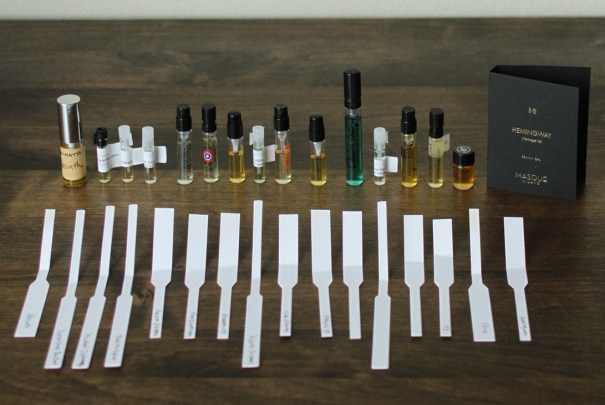
If you’re looking for a no-fuss, pitch-perfect vetiver perfume, you want 33 by Chris Rusak. HEELEY Vetiver Veritas is another solinote vetiver, and it leans hard into the grassy, grapefruit-mint side of the material. Masque Milano Hemingway is a standout vetiver-forward scent composed by Fanny Bal, with cedar, ginger, and patchouli accents.

Hermes Terre d’Hermes by Jean-Claude Ellena is a classic vetiver scent, impeccably balanced with mineral, cedar, and citrus notes.

Nasomatto does wonderful things with vetiver in Absinth, a complex, sweet green fragrance with loamy earth and wormwood. J. Hannah Co. Skive is an exceptional leather scent woven with unmistakable vetiver and frankincense. Jovoy Incident Diplomatique is a captivating duo of vetiver and patchouli, velvety yet dry with a touch of nutmeg and juicy citrus.

Etat Libre d’Orange bridges vetiver and vanilla in the delightful, creamy-salty-grassy-resinous Fat ElectricianSerge Lutens does something similar yet more restrained with the elegant, ambered Vetiver Oriental.

Other vetiver-forward perfumes include Comme Des Garcons Clash: Radish x Vetiver (aquatic/mineral scent meets subtle dirt and grass), Essential Parfums Mon Vetiver (gin & tonic and light cotton with a touch of smooth green), HEELEY Espirit du Tigre (camphorous, herbal, energetic), Oriza L. Legrand Vetiver Royal Bourbon (spicy cardamom barbershop with an herby, grassy, leather texture), Olfactive Studio Ombre Indigo, and Escentric Molecules Escentric 03. Escentric Molecules Molecule 03 can be a helpful point of reference with its single note of synthetic vetiver—or you can just buy vetiveryl acetate from any materials supplier for a few bucks.

Perfume Note: Lychee

IMG_6022

After I raided my sample collection for tea scents, I found myself returning to Nishane‘s Wūlóng Chá and its delicious lychee oolong.

Then I started noticing more scents and flavors described as “lychee”—a wine with lychee notes, a lychee and coconut scented shampoo. I no longer felt sure I knew what lychee smelled like. In fact, Nishane doesn’t actually list lychee as a note in Wūlóng Chá. So I got my hands on some actual lychee, along with a lychee-flavored “pudding” (more of a jelly, which works, because lychee flesh is a little bit jelly-like). The scent strikes a balance between sweet, tart, and bitter, with a milky-watery character that could be at home alongside rosewater or fresh coconut.

In terms of aroma molecules, the scent can be loosely reconstructed with raspberry ketone, geraniol, and cassis materials (berryflor and/or labienoxime, which is also used for fig notes). Now that I’m truly acquainted with lychee, I can tell you for certain: Wūlóng Chá is a damn good lychee tea perfume.