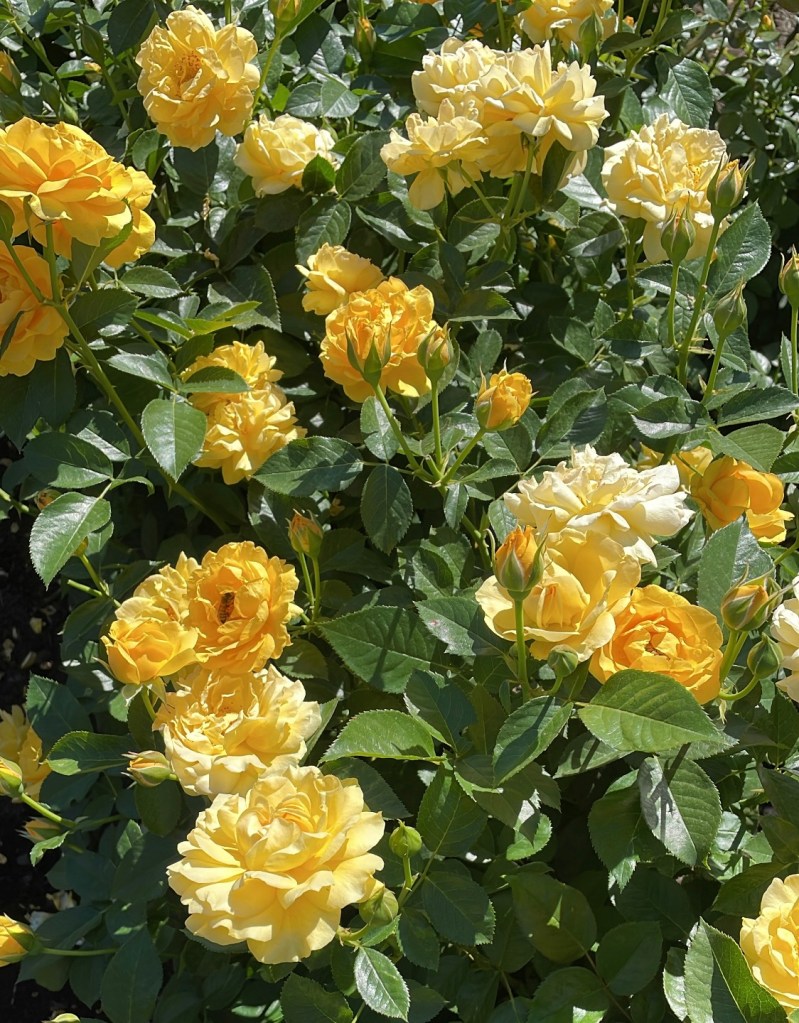
What is the difference between “natural perfumes” and “synthetic perfumes”? Let’s use rose as an example.
For a rose note in their perfume, a natural perfumer will use rose essential oil, distilled directly from roses. In the bottle, that rose essential oil contains all the different aromatic molecules that came from the particular roses distilled in that batch. It’s one essential oil, but it contains a multitude of molecules — around 300-450 different aromatic molecules. Different rose essential oils vary in quality, and can have different characteristics.
For a rose note in their perfume, a perfumer working with synthetics will use the individual molecules as building blocks to craft the precise rose they want. A generally rosy note can be created with just the 3 main aromatic molecules of roses: geraniol, citronellol, and phenyl ethyl alcohol (PEA). For more rosiness, adding rose oxide, beta-damascenone, and beta-ionone goes a long way. From there, they can build their rose to be green, or fruity, or a tea rose. They have more control over how their rose molecules will overlap and interact with the other notes in their perfume, because they are in control of each molecule and its ratio.
Natural perfumery, to me, is more about sourcing high-quality materials, then blending them with restraint. A formula for a natural perfume is generally a lot shorter than a perfume formula built with synthetics. With synthetic materials, however, there’s so much more you can build and create (and more consistency you can achieve) than with a naturals-only palette.
Counter to a lot of misinformation out there, synthetic perfume materials have many environmental and health advantages over natural materials. Because the aromatic molecules present in roses are not only present in roses, many synthetic molecules can be produced in “upcycled” ways, like getting linalool from wood pulp, or vanillin from the “waste” of the paper industry. It’s also easier to control potential allergens or irritants when working with the isolated molecules of synthetics. So don’t get taken in by fear-based marketing implying that natural is always safer.
 Scent Appreciation