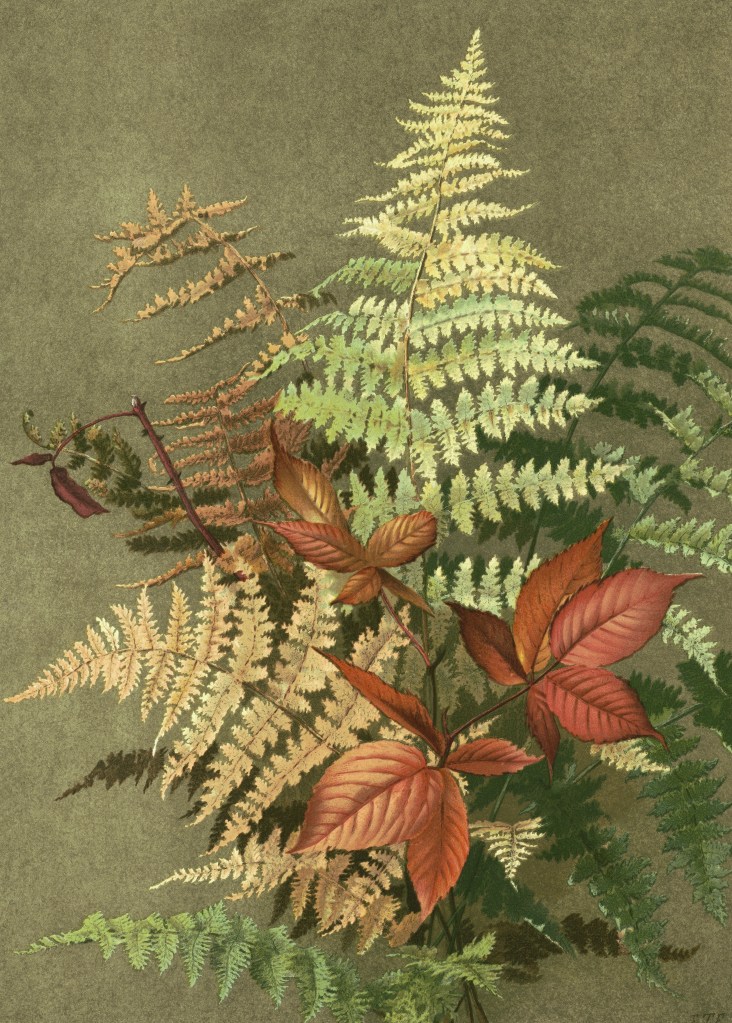
Fougères are a category of perfume that, for a long time, I found hard to wrap my head around. The name means “fern,” but ferns are not an aromatic scent material and fougère perfumes are not, exactly, leafy green scents. I associate the fougère smell with traditionally masculine scents like shaving cream, men’s deodorant, and barbershop products.
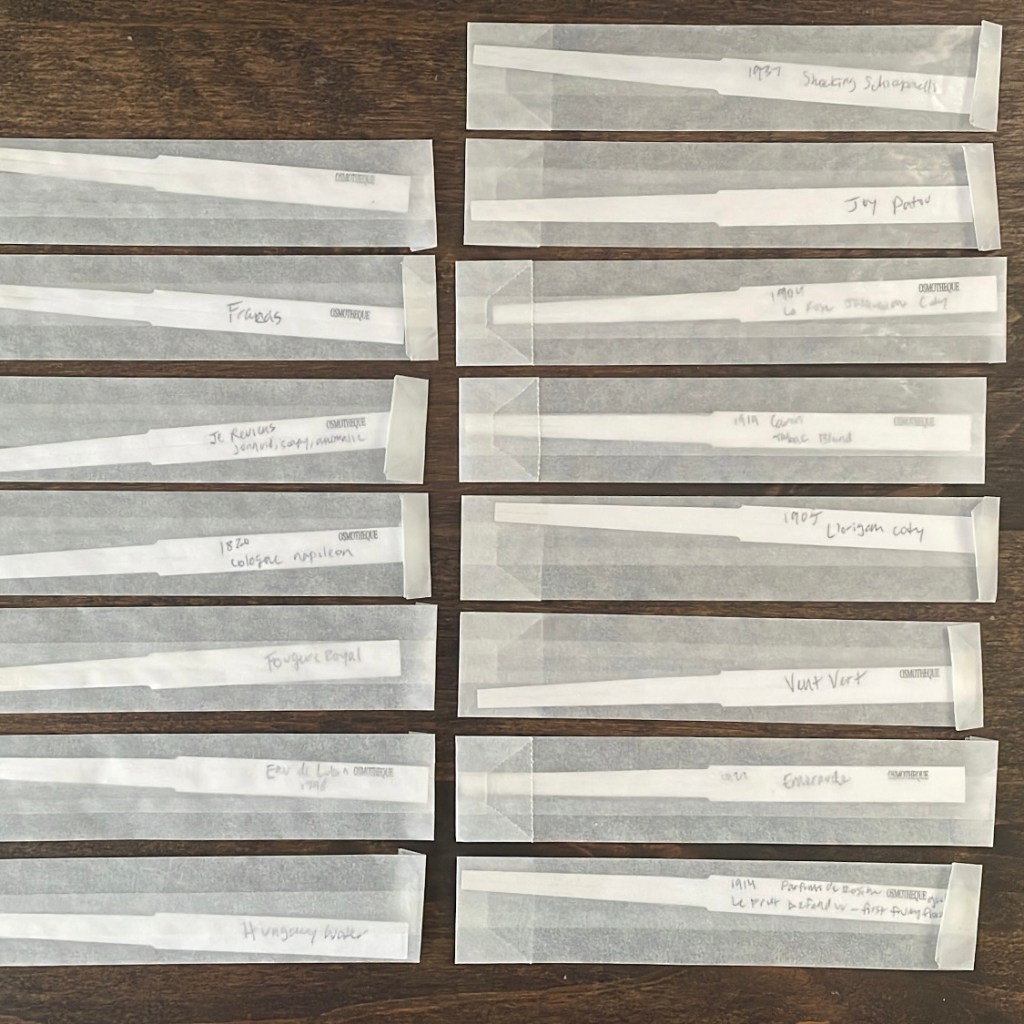
The original fougère, Houbigant’s Fougère Royale (1882) revolutionized modern perfumery because it was the first perfume to use a synthetic molecule: coumarin, synthesized from tonka beans. Coumarin is soft and powdery-sweet, somewhat vanillic, but with a grassy-herby undertone like mown hay.
Fougère Royale centered on coumarin, lavender, and oakmoss. It’s powder-fresh and dewy-sweet, with a grassy-herby quality like freshly cut hay.
The duo of coumarin and lavender is generally considered to be the signature of a fougère. They often also contain geranium, oakmoss, vetiver, bergamot, and other woody, spicy, or herby notes.
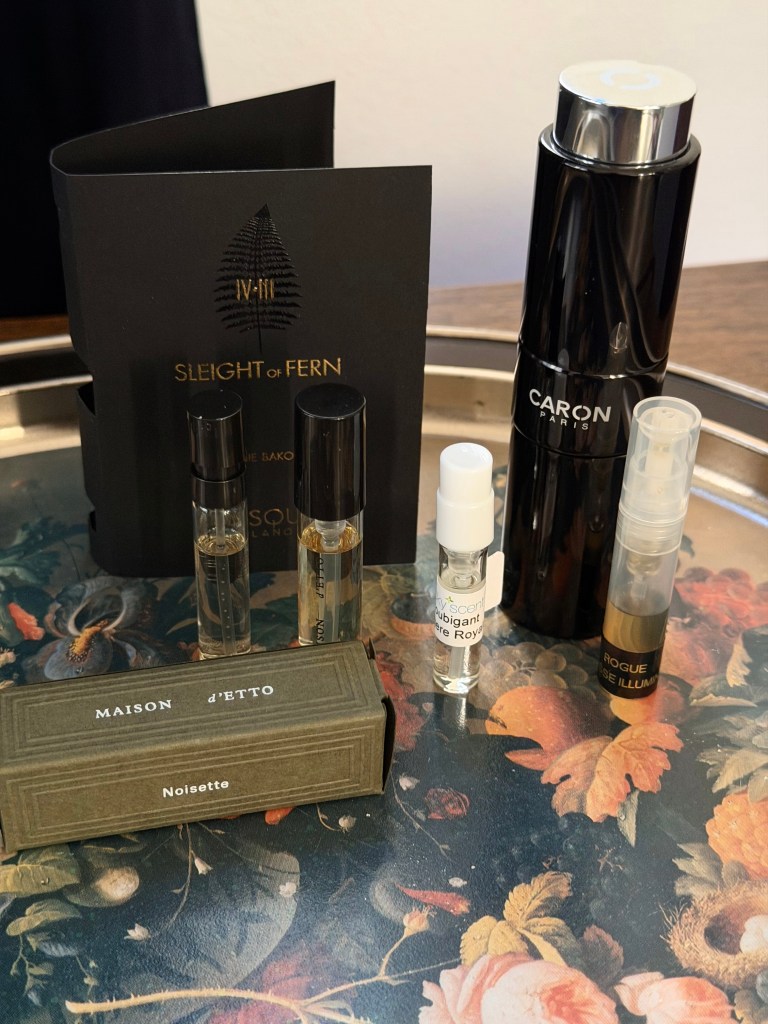
Some of my favorite fougères include:
Mousse Illuminee, Rogue Perfumery
Bitter, soapy, green. Treemoss is the star, with laurel leaf, cedar, and cypress. A great “masculine” scent, and a categorical example of a fougère.
Noisette, Maison d’Etto
A lavender orris fougère. The addition of orris adds a gentle earthiness. This scent is fresh, peaceful, and grounded. Its personality is calm and quiet, with a rich inner life.
Caron Pour un Homme, Caron
Is this a fougère? It centers on coumarin and lavender, but is less green-woody and more vanilla-lavender. Sweet and soft. I sometimes find it to smell a little oily, but that doesn’t keep me from loving it.
Sleight of Fern, Masque Milano
A darker fougère, richer and deeper. A fougère for the night.